

Section 01
What Is Google Navboost and How Was Its Existence Confirmed?
Navboost is Google's click-based re-ranking system that adjusts search result positions based on how users interact with results after clicking them. Its existence was confirmed publicly for the first time under oath at the 2023 U.S. DOJ antitrust trial, when Google VP of Search Pandu Nayak described it as "one of the most important ranking signals in Google Search." A 2019 internal email from VP Alexander Grushetsky, presented as trial evidence, stated that Navboost alone was "likely more powerful than the rest of ranking combined on click and precision metrics."
Two Sources That Ended the Debate
For over a decade, Google denied using click signals as ranking factors. Gary Illyes (Google) called theories about CTR and dwell time "generally made-up crap" in 2016. Two events in 2023–2024 made those denials untenable. First, the 2023 DOJ antitrust trial produced sworn testimony and internal emails confirming Navboost's existence and its significance. Second, in May 2024, 2,596 pages of Google's internal Content API Warehouse documentation leaked publicly — and within them, Navboost appeared repeatedly as a core ranking module with specific, documented fields for tracking click behavior.
Google confirmed the authenticity of the leaked documents without fully contesting their contents. The leak named exact click categories — goodClicks, badClicks, lastLongestClicks, unsquashedClicks, unsquashedLastLongestClicks — that Navboost ingests as inputs. Together, the trial testimony and the leak constitute the definitive evidence base for what is now known about how Navboost functions.
When Was Navboost Built and How Has It Evolved?
Navboost originated around 2005, when Google engineers began internal experiments using aggregate click patterns to identify results that satisfy user intent versus results that lead to pogo-sticking. The foundational insight from this early research was that while individual click events are noisy, aggregate patterns across millions of searches produce reliable quality signals — the same statistical principle that led to PageRank's success with link signals a few years earlier. Navboost applies the same aggregate-over-noise logic to behavioral signals.
By the time of the 2023 trial testimony, Navboost had been operating as a live ranking component for approximately 18 years, processing behavioral data at a scale Google describes as 8.5 billion searches per day. The system operates as a Twiddler — a re-ranking layer applied after the primary scoring algorithm — adjusting final result positions based on accumulated click quality signals before the SERP is served.
Section 02
What Are the Three Click Types That Navboost Tracks and How Are They Classified?
The 2024 API leak revealed that Navboost classifies every SERP click into one of three primary categories — goodClicks, badClicks, and lastLongestClicks — each representing a different level of user satisfaction with the result. These are not abstract labels; they are documented fields in Google's internal data structures with specific behavioral thresholds for classification.
| Click Type | User Behavior | Ranking Effect | What It Signals to Google |
|---|---|---|---|
| goodClick | User clicks result, stays on page for meaningful time, does not return to SERP | Positive — accumulation boosts rankings over time | Query was resolved — content satisfied intent |
| badClick | User clicks result, returns to SERP quickly (pogo-sticking) | Negative — accumulation depresses rankings over time | Query was not resolved — content failed to satisfy intent |
| lastLongestClick | Final click in a search session AND the longest dwell time in that session | Strongest positive signal in the system | Query was definitively resolved — user's search journey ended here |
| unsquashedClicks | Raw click counts before the normalisation function is applied | Used in squashing calculation — not a direct ranking input | Volume baseline for the squashing algorithm |
lastLongestClick — the Most Powerful Signal
The lastLongestClick is the most powerful positive signal in Navboost. When a user searches, clicks multiple results in sequence, and finally lands on a page they stay on for the longest duration before ending their session, that final result receives the lastLongestClick designation. This matters more than a simple goodClick because it represents the point at which the user's search ended — they found what they were looking for and stopped searching.
A page with 1,000 clicks but consistently earning lastLongestClick status ranks above a page with 10,000 clicks that users abandon quickly. The system measures resolution quality, not visit volume. For adult content specifically, this means the page that actually delivers the content the user's query promised — not just a page that earns clicks with a compelling title — accumulates the strongest Navboost advantage over time.
Section 03
How Does Navboost's 13-Month Window, Squashing Function, and Device Data Work?
Navboost operates on a 13-month rolling data window — click quality signals from the past 13 months continuously inform current rankings, with older data rolling off as new data accumulates. The system applies a squashing function to normalise click volume, and it incorporates device-specific data from mobile searches (Android and Google app on iOS) as a separate signal stream from desktop.
The 13-Month Rolling Window
The 13-month window means that a site's Navboost profile is an accumulation of approximately one year of click quality history. This has two significant implications for adult site operators. First, a new site or a site that has recently improved its content quality does not immediately benefit — it must accumulate a sufficient number of new goodClicks to displace the existing click quality history. Second, a site that has been generating badClicks for months carries that negative history into the present, and cleanup requires time proportional to the damage accumulated.
For seasonal adult content queries (holiday-themed, event-tied), the 13-month window captures roughly one full seasonal cycle — meaning last year's click quality for a specific seasonal query informs this year's rankings before the season begins. Sites that earned lastLongestClicks on a seasonal query last year start this year's equivalent period with a ranking advantage before any new clicks are generated.
The Squashing Function — Why High Traffic Doesn't Win by Volume
The squashing function is a mathematical normalisation step that prevents high-traffic pages from dominating purely through click volume. Without squashing, any page that ranks #1 on a high-traffic query would accumulate more clicks simply by virtue of its position, regardless of quality — creating a self-reinforcing dominance loop. Squashing dampens the raw click count so that click quality (good-to-bad ratio) matters more than click quantity.
Practically, this means a lower-ranking page with a better click quality profile can overtake a higher-ranking page with worse satisfaction signals over time. For adult directories and tube sites competing against each other for the same queries, the Navboost squashing function is the mechanism that allows a better-curated result to rise above a more prominent but less satisfying one.
Section 04
What Does It Mean That Navboost Is Query-Normalised — and Why Does Raw Traffic Not Count?
Navboost is query-normalised — it does not evaluate a page's absolute click counts, but the ratio of its click quality (good/bad clicks) relative to the average for other results on the same query's SERP. This means only clicks that originate from a user's Google search for a specific query contribute to Navboost signals for that query. Social media traffic, direct visits, referral traffic, and paid campaigns generate zero Navboost signal regardless of volume.
What Query Normalisation Means in Practice
If the average good-to-bad click ratio for results ranking for "free adult cam sites" is 60/40, and your page achieves 75/25, Navboost registers your result as outperforming the query average and applies a ranking boost. If your page achieves only 45/55, it underperforms the query average regardless of how many total clicks it receives, and Navboost applies downward pressure on its position.
This normalisation architecture has a critical consequence: buying traffic, incentivising visits in crypto, or running campaigns to inflate on-site analytics does not produce Navboost signals for any query. Those visits did not originate from a SERP click for a specific query. They cannot be classified as goodClicks or badClicks in Navboost because Navboost has no record of the search query that supposedly led to them. For a full analysis of why paid engagement schemes fail specifically because of this mechanism, see our guide on Google penalties for incentivized user engagement.
Section 05
How Does Navboost Specifically Affect Adult Sites — and What Are the Unique Risk Factors?
Adult sites face three Navboost risk factors that are specific to the category and largely absent from mainstream content sites: thumbnail promise mismatch (misleading thumbnails that earn clicks but produce immediate pogo-sticking), age verification gate friction (users who hit a gate before content load return to SERP, registering as badClicks), and genre labelling inaccuracy (a video categorised in the wrong niche delivers wrong-intent content and generates badClicks from searchers who wanted something different).
Navboost Risk Factors — Relative Impact on Adult Site Click Quality
The Thumbnail Promise Problem
Adult tube sites generate high click-through rates by using compelling thumbnails and titles — often selected specifically to maximise clicks regardless of whether the thumbnail accurately represents the content. This creates a systematic Navboost liability: every click earned by a misleading thumbnail that fails to deliver the promised content is a badClick. A page with a 12% CTR but a 70% pogo-stick rate is accumulating badClicks faster than goodClicks — and over the 13-month rolling window, this produces sustained ranking decline for the query terms that thumbnail earned clicks on.
The SEO community framework of "earn the click, then earn the stay" is precisely what Navboost measures. For adult tube sites, these are genuinely separate problems: high CTR is a thumbnail and title optimisation problem; high dwell time is a content delivery and content accuracy problem. Navboost penalises the scenario where a site excels at the first and fails at the second.
⚠️ Age Gate Friction and badClicks
Sites required to show an age verification gate before content is visible face a structural Navboost challenge. A user who clicks an organic result and encounters an age gate before seeing any content may return to the SERP rather than complete the verification — producing a badClick. This is an unavoidable compliance trade-off for sites in jurisdictions with age verification mandates, but the impact can be mitigated by ensuring the gate loads instantly (no LCP delay before the gate renders), making the gate completion process as frictionless as possible, and setting persistent cookies so returning users do not re-encounter the gate on subsequent visits from the same device. For the legal framework driving age verification requirements, see our US age verification law tracker.
Section 06
How Do You Optimise for Navboost on Adult Sites — What Practical Actions Improve Click Quality?
Optimising for Navboost means reducing badClicks and increasing goodClicks and lastLongestClicks on each specific query your pages rank for. The four levers are: title and thumbnail accuracy (deliver what you promise), page load speed on mobile (prevent abandonment before the page renders), content depth and engagement (give users reason to stay), and internal discovery architecture (keep users on-site after the initial content satisfies them).
Title and Thumbnail Accuracy — The Primary Lever
The single highest-impact change for adult tube sites is improving the accuracy of titles and thumbnails relative to actual content. Every title tag should describe the actual content a user will find — not the most clickable phrasing that can be constructed from the content metadata. This is a deliberate trade-off: lower CTR from more accurate titles, but higher good-click rate from users who clicked because the title genuinely matched their intent. Over the 13-month Navboost window, the quality ratio improvement outweighs the click volume reduction.
For directory and review sites, the same principle applies to meta descriptions: a meta description that sets accurate expectations for what the landing page contains produces users who are pre-qualified to find the content satisfying. Clickbait meta descriptions that earn clicks from users whose intent doesn't match the page content are a systematic badClick generator.
Mobile Load Speed — Preventing Pre-Engagement Abandonment
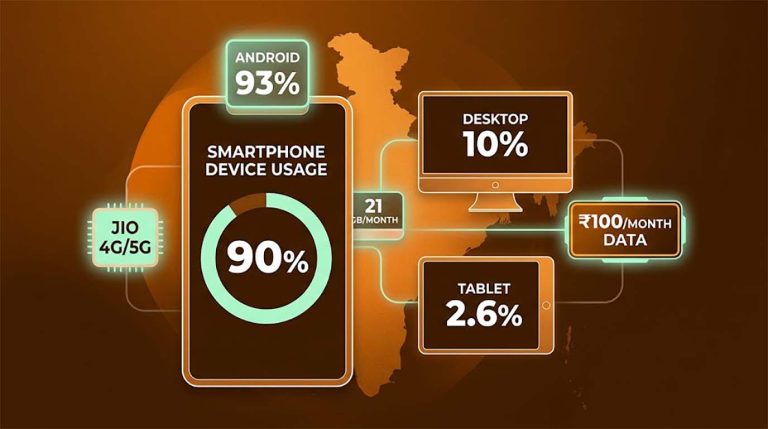
A user who clicks an organic result and abandons before the page finishes loading produces a badClick. On adult sites, where mobile traffic typically represents 75–92% of visits (higher in India, Southeast Asia, and other high-growth markets), slow LCP on mobile is the primary technical source of badClicks. Every 500ms of LCP above 2.5 seconds on a throttled 4G mobile connection produces measurable abandonment that Navboost classifies as dissatisfaction with the result.
For the relationship between page performance and ranking signals across the adult industry specifically, see our guide to the March 2026 core update and adult site recovery. The updates most damaging to adult sites consistently correlate with LCP and engagement signal deterioration alongside content quality assessments.
The Internal Discovery Architecture
The most powerful Navboost signal is the lastLongestClick — the page where a user's search session ends because they found what they wanted. For adult sites, earning lastLongestClicks requires not just delivering satisfying content on the landing page, but ensuring the user doesn't feel the need to return to Google to find something better. Strong internal recommendations (related content, related performers, category navigation) that extend the session on your site increase the probability that your result is the session-ending click. A user who arrives, finds satisfying content, and then explores five more pages on your site before leaving has definitively not pogo-sticked — and that extended session registers as a strong positive signal for the original query. For how link architecture supports both Navboost and traditional link authority signals, see our complete guide to link profiles for adult sites.
✅ Navboost Optimisation — Practical Checklist for Adult Sites
Title accuracy — describe content precisely, not maximally-clickable phrasing. Thumbnail selection — use a frame that represents what the video actually contains. LCP under 2.5s on throttled mobile — the primary technical badClick prevention measure. Age gate performance — gate must load instantly with no LCP delay; set persistent cookies. Internal recommendations — curated related content keeps users on-site and earns lastLongestClick designation. Genre accuracy — correct category/niche tagging prevents wrong-intent clicks from searchers whose query doesn't match the content. No intrusive interstitials — pop-ups on landing before content is visible cause immediate pogo-sticking.